Do you want to be a model?

Yesterday I read a post from a new-to-me blogger that discussed the ways in which some women lash out against other women – particularly around body size/ shape/ aesthetic/ “beauty”.  The author called for a cease-fire, but then took the post two steps further by:

  1. Showing how one bold fashion retailer is authentically celebrating women of all ‘designs’ by creating a progressive look-book;
  2. Stating that she (the blogger) wanted to create her own personal look-book to truly ‘walk the talk’ behind her ideas and convictions.

I loved the images from the retail look-book that the blogger included in her post (I highly recommend visiting her site if for no other reason than to see the pictures for yourself – they are that awesome), and thought the author’s plan to create her own look book was a terrific idea.  I left an encouraging comment for her that read in part, “…I’m excited to see your personal interpretation/rendition (of a look-book)! Very good stuff here lady; keep on!”  The blogger replied to me with, “Thanks for the feedback! (The retailer’s) lookbook made me so happy. I’m actually having some difficulty assembling mine – when I search for images of diverse models, I just can’t find a lot of different physical combinations.”

At this point I realized I had a different interpretation of what the author meant when she said she wanted to make her own personal look-book; and I let her know.  I responded back, “I was imagining you were creating a look book of people from your personal life (or community). I think that would be a lot more interesting…”  Less than an hour later, the blogger replied, “Stef, that’s a brilliant idea!  The original idea was much simpler…Doing more hadn’t crossed my mind, but I’m really glad you spoke up! A community lookbook would be much cooler…So I might take you up on this. Any chance you’d want to try something similar? Now I’m envisioning getting lots of bloggers to join in. We could have a mini-revolution!”

Truthfully, I had no plans to take this on as my own personal project – the fact that this blogger was doing it seemed ‘good enough’ to me.  But.  I seemed to have struck a chord and stirred the pot, so to walk away from an idea that I had encouraged in another person seemed disingenuous.  After a few moments of internal debate, I came to a compromise, and told the blogger, “As for me participating…. here’s what I’ll do: I’ll post a ‘call for submissions’ in my three most-visited social media sites (my two active blogs, and my Facebook page), and see if my friends/family/readers want to participate. If I get at least, let’s say, 9 submissions, I’ll create my own ‘book’. How does that sound?”

And that’s where things stand right now.  So, here comes the ask: Do any of you want to participate as a model in a look-book that represents my personal community?  ‘Participation’ would entail you sending me a photo of yourself in attire and a pose that make you feel beautiful.  Not just ‘okay’, and not even ‘just’ pretty, but full-on, all-out beautiful.  I would also love for you to highlight a feature or characteristic of yourself that makes you uniquely you – a la the spirit of the models in the retailer’s book.  If at least 9 people send an image, I will then use the pictures to create a ‘book’ (format TBD) and publish it on my blog (so in addition to sending a picture, you also need to be okay with your picture being made public).

So, there’s the question: Do you want to be a model?  If so, send me a picture, and if eight other people beside you choose to ‘play’, I’ll create a book about all the cool, brave people in my community. (Comment below if you want to participate but don’t know how to reach me; I’ll send you my contact info privately.)

I’m curious to see how this all develops.  Stay tuned….  :)

Diversity_feature

Stef

Posted in advertising, awareness, beauty treatment, connection, courage, hope, manifesting, pictures, postaday, support | Tagged , , , , , , , , , | 5 Comments

#2: Attend the Minneapolis May Day Parade

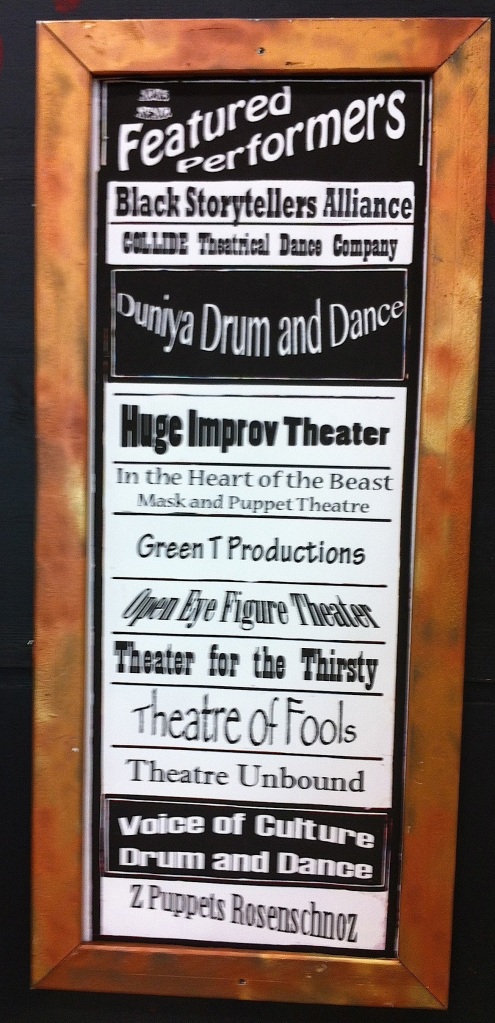
In addition to offering a plethora of museums, sporting events, and year-round outdoor activities, Minneapolis is also home to more eclectic groups and events, such one of the largest Fringe Festival in the world, the annual naming of a dairy  queen (who then gets her bust carved in a 90-pound block of butter),  and unique theaters – like In The Heart of the Beast Puppet and Mask Theater (or “HOTB” for short).

I have never been to a HOTB production.  When I first heard the term “puppet theater”, I assumed that it was designed for small children.  But then someone told me that HOTB creates puppets of tremendous size, scale, and complexity – and that the productions are definitely more for adults than kids.  Shortly thereafter, I learned of the annual May Day parade that HOTB sponsors (and that the Minneapolis May Day parade is the largest one in the United States).  Massive puppets plus a massive event?  Upon receipt of this knowledge, I felt like I had to experience May Day at least once.  (I mean, to live in the city for 16 years and never attend a nationally-known event that occurs annually is kind of like living in New York and never exploring the Statue of Liberty…)  Interestingly, as I began to make plans for the May Day event, my yoga teacher announced at one of her classes that she lived just two blocks from the starting line of the parade, and that she would be hosting a pre-parade brunch for anyone who wanted to attend.  Huge puppets, free food, and a host to help navigate the logistics of the day?  I am so in!

Unfortunately, when the morning of the event arrived, I felt quite sick.  But I really wanted to see the puppets.  So I laid on the sofa for twenty minutes, breathing slowly and mindfully, willing myself to feel better.  (I silently repeated a mantra of, “I will not throw up.  I feel fine.  I will not throw up.  I feel fine….”)  When it came time for me to either leave the house or miss the event, I drew in a deep belly breath, then let it out slowly. Carefully, I stood upright, then took a small sip of water.  When I didn’t throw up, I declared myself “good enough” to head over to the parade.  (Mind over matter, right?)  ;)  [To be fair, I really did know that the queasy sensation I was experiencing was being caused by stress and anxiety, not by a virus; if I thought I was medically ill, I would not have left the house and risked exposing other innocent people to my germs.  I’m more responsible than that.]

After completing my standard Sunday morning yoga class, I drove the teacher over to her house, where she prepared “vegan taco toast” for the handful of folks that accepted her brunch offer.  (Vegan taco toast = a slice of toasted multigrain bread topped with a layer of vegan sour cream, several slices of avocado and raw tomato, and a dollop of scratch-made black beans.  Individuals could then opt to customize their meal with salt and/or hot sauce.)  Initially I was in no shape to be eating Mexican food; but after a while hunger kicked in, and I enjoyed a small serving of the fare. (I added the salt and skipped the hot sauce).  It was a pretty tasty snack.

vegan taco toast

After some mingling, a small group left the house and head down the street to see the parade.  My yoga teacher walked beside me, and as we made our way from the back towards the front of the parade line-up, she shared little nuggets of information about the various groups that frequently participate in the event, as well as fun facts about the neighborhood that the route moves through, and her experiences of past May Day events.  I always appreciate having an ‘insider’ show me the ropes of an event or serve as a casual guide to an experience – their first-hand knowledge is nearly always priceless.  This May Day experience was no exception; thanks to my yoga teacher, I quickly learned that May Day in Minneapolis is about a lot more than puppets.

Interestingly, when I chatted with one of the other yogis who attended the pre-parade brunch, she described the May Day event as a mini version of Burning Man.  I have never been to that gathering, either – but from what I have heard and read about it, Burning Man seems to be a loosely organized event that predominately appeals to people with artsy, independent, and idealistic spirits.  Individuals gather in the desert, then do pretty much whatever they want.  (Indeed, the stated premise of Burning Man is “an annual experiment in temporary community dedicated to radical self-expression and radical self-reliance.”)  With this new information, I was now even more curious about the Minneapolis May Day/HOTB experience.

In looking at some of the groups who were lined up at the start of the parade, I drew a few conclusions:

  • It seemed that any group who wanted to be in the parade could do so.  I saw several large, well-organized gatherings of people – yet I also saw other sections that seemed to be a handful of individuals maybe working together to attempt to communicate some sort of idea to the spectators…?  Definitely many different interpretations about what it means to ‘participate’ in a parade.
  • This event had a “parental discretion is advised” feel to it.  Certainly many of the groups participating were very kid-friendly (indeed, many of the segments of the parade were largely comprised of children and families); but some of the other sections in the line-up were definitely more dark, political, controversial…
  • Despite a bit of caveat emptor, the overall parade had a light, festive feel to it.  One thing that contributed to this vibe was the large amount of music and dancing that took place in (and around) the parade.  I heard the rhythmic beats of a drum corps (which always make me smile), a jazzy swing band (which was pulled on a platform by two men on bicycles), Native American drumming (with matching dancers!), the cool tin sounds of steel drums (which always creates a tropical scene in my mind)… the variety (and intensity) of music offered was really cool.
  • The parade also had a strong local community feeling.  It seemed that all residents in the area (young singles, families with children, empty-nesters, the elderly…) were either in the parade, or were supporting people in the parade.  The vibe of the entire event was casual and relaxed; festive, but in a summer-picnic kind of way.  It made the big city feel like a small, relatable community (if a somewhat ‘hippy-trippy’ one).  It was cool.
  • What primarily drew me to this event was the promise of huge puppets – and the parade did not disappoint.  I saw many large, bold, detailed, awesome puppets.

But no matter how descriptively I write about the May Day parade, a person really has to attend the event in order to fully appreciate it.  Yet since many people I know may never have the opportunity to make a May Day trip to Minneapolis, I’m going to post a variety of pics that hopefully convey some of the spirit of the day.  While it’s not the same as watching the festivities first-hand, hopefully the images below serve as a semi-decent proxy.

First up: The larger groups.

This slideshow requires JavaScript.

Next up: The smaller groups.

This slideshow requires JavaScript.

The majority of the parade participants were joyful; but a few focused more on darker (or political) topics:

This slideshow requires JavaScript.

Enough of that.  Back to more festive groups!

This slideshow requires JavaScript.

People of all ages actively participated in the parade.  Here is a small sampling of some of the younger and older ones:

This slideshow requires JavaScript.

The sense of community was palpable both in the parade, and among the observers as well:

This slideshow requires JavaScript.

Ready for some puppets?  First, let’s explore the question, “Why puppets?”

22_puppet intro

Starting with the smaller puppets:

This slideshow requires JavaScript.

Finishing with the larger puppets:

This slideshow requires JavaScript.

The puppet below is one of my favorites, for a few reasons.
1) It reminds me of our puppies (albeit it on a completely different scale);
2) As this dog puppet was walking down the street, a real big black dog (it looked like a large spaniel) was sitting on the side of the road with its owner – and when the real dog saw the puppet dog, Real Dog went nuts.  Real Dog started barking and lunging, and definitely wanted to tussle with Puppet Dog.  It was hilariously funny to watch.

28_large puppet

For perspective, the woman in the black coat is probably 5′ 6″ tall. From paws to tail, the height of this puppet is probably around 7 feet.

After the parade ended, HOTB festivities continued with a ceremony and open-air festival at the neighborhood park.  Even though the weather was fantastic (70 degrees and sunny – terrific for an early May day in Minneapolis [particularly this year, where nearly every day in March and April was some variety of cold/wet/gray, and where it had snowed just three days before]), I still wasn’t feeling super-great – so I thanked my yoga teacher/event host for her hospitality and kindness, then bid her farewell (until next week, when she will kick my booty in class once again).  :)  While I was slightly disappointed that I was going to miss the various music, dancing, and poetry acts in the park, I came to the event mostly so I could see the big ol’ puppets – which I did.  (And which were super cool).  So at the end of the day, I got what I wanted: a new experience.  I left the event happy.

Stef

Posted in 101 in 1001, art, awe, awesome, celebration, city, day zero project, experience, holiday, pictures, postaday, smile, spring | Tagged , , , , , , , , , , , , | 2 Comments

Beyond 101: Attend WordCamp

(Warning: This is a LONG post.  Like, seriously long.  If you don’t have a lot of interest in WordPress, you may not enjoy reading much of this post.  And that’s totally cool – feel free to skip over this one.  You won’t hurt my feelings.  However, if you do want to know more about what a WordPress conference is like, keep on scrolling down.  Either way, thanks for stopping by, and for reading this far – I truly appreciate it.  Okay, on with the post…) 

I have been writing and publishing content in online formats (i.e., blogging) since 2003.  I created my first blogs using a very basic service called Blogger.  The templates Blogger provided were incredibly easy to use, and I was able to transition from zero knowledge of blogging to getting an online space up and running in literally 30 minutes.  (Talk about immediate gratification – it was terrific!)  I spent a few years with Blogger, but after a while I wanted an online space that was more customizable.  I did a bit of poking around, and learned that WordPress was a fairly easy-to-use service, yet provided significant opportunities for customization to their ever-growing menu of templates.  After some thought, I decided to make the move from Blogger to WordPress – and I honestly haven’t looked back.

The promise that lured me to WordPress has held true: I have been able to apply ready-made templates to an online space carved out just for me, then easily tweak each template to give the space my own feel and flair.  Had that been all WordPress delivered to me, I would have been quite happy.  However, after engaging in the space for a few months, I realized that WordPress has a very strong community of professional designers and support staff, as well as everyday end-user bloggers who contribute to the space “for fun and for free”.  I found myself slowly being supported in ways that were truly unthinkable when using Blogger; indeed, the staff and volunteers at WordPress provide opportunities for all users to develop the craft of writing, to learn new technical skills, and to interact with people all over the world.

So far, all of my WordPress education and networking has been done virtually/online.  But. Last year I read about WordCamps, which are conferences that focus on a variety of WordPress-related topics, and which take place in cities all over the world.  I immediately looked at the schedule of upcoming WordCamps, but was disappointed to learn that no gatherings were even remotely close to me.  I left a comment on the blog post that described this event, expressing my desire to attend a WordCamp conference should it ever find its way to the Twin Cities.  Then I went on with my life, fairly confident that the odds of me getting to attend a WordCamp were very slim.

When the list of 2013 WordCamp sites was published, I perused the list mostly out of curiosity; but when my eyes landed on a line that read “Minneapolis”, I was thrilled!  I immediately went to the site-specific details, and learned that not only was WordCamp coming to my own back yard, but that the cost of a day-long pass was a mere $20.  Double goodie!  Without hesitation, I signed up for the conference.  I didn’t know exactly what would occur during the day-long session, but I figured if it was about WordPress and designed by WordPress, it was probably going to be good.  And even if the experience was less-than-stellar, I was only out a few hours and $20.  It was a gamble I was willing to take.

After weeks of waiting, WordCamp finally arrived.  I learned that the experience was segmented into three distinct tracks: Continuing Education, School of Business, and School of Design & Technology.  Furthermore, each track offered two Beginner, two Intermediate, and two Advanced sessions.  I read through a 3-4 sentence summary of every offering, then chose the ones that appealed the most to me.  With my decisions in hand, I was ready to experience WordCamp – and experience it I did.  Here’s the recap of how my day went down:

8 am: Registration

  • WordCamp was held at a local community college – and finding the right segment of conference rooms amid the many options spread out across a large campus was more of a challenge than I had expected.  Somewhere in the middle of my stumbling I met G, a young-ish professional working for a non-profit who had just been handed the job title of “webmaster”.  Her organization uses WordPress as the basis of their website – so she was attending the session to learn information that would hopefully help her at her job.
  • Together G and I found the conference registration tables, where we each collected our name bade and schedule card.  After settling in, G and I chatted for 20 minutes or so, then made our way to a lecture hall to hear the Opening Remarks.

8:30 am: Opening Remarks

Attendee Demographics:

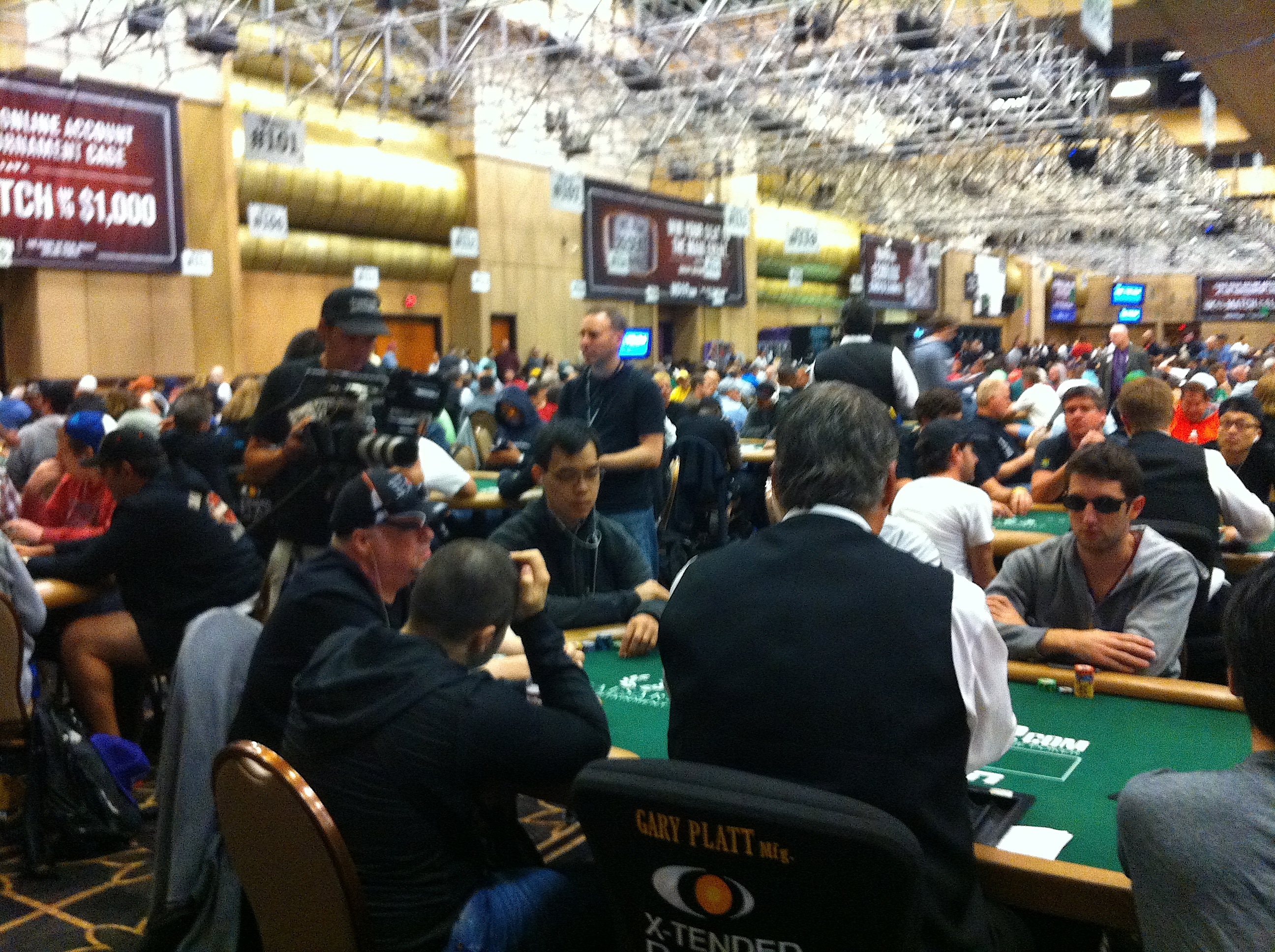
  • The conference hall probably sat 200 people or so; and every seat was taken.  Attendees who had arrived later than G and I stood along the walls, and/or leaned in through open doors from the hallway.
  • Of the 225 (or so) people seated in the lecture hall, 100% of us were white.  Try as I might, I did not see one black face in the crowd.  Interesting.
  • The gender mix of us was around 70% men, 30% women – which surprised me.  I imaged there to be more female bloggers than male ones.  Again, interesting.
  • The average age range of the group was somewhere in the mid 30s to late 50s.
  • As I looked at the faces around me, I saw lots of glasses, scruffy beards, and stern faces.
  • Curious by the composition of the audience, I started casually chatting with some individuals and asking them about their motivation for coming to WordCamp – and learned that most people in attendance were here for work (either for a company, a non profit, or as a freelancer) – not for fun.  Interesting…
  • Roughly half of the participants were first-time WordCamp attendees.  (There was a show of hands.)

Content Shared (highlights):

  • Recognition of sponsors (whose generosity allowed us all to attend WordCamp for only $20 – and so to whom I am truly grateful).
  • Recognition of volunteers (whose time and effort allowed us all to attend a well-organized and expertly designed conference experience – and so to whom I am also very grateful).
  • Of the eight primary volunteers formally recognized, only one was a woman.  Hmm…
  • Run down of the day: three hour-long sessions, then lunch (provided by the community college – very strategic), three more hour-long sessions, then swag pick-up followed by post-conference party.
  • Swag: A pint glass.  Post-conference party: a kegger at the office building of a local software development company.  Yeah, given the faces I’m seeing in this crowd, that seems about right…
  • Instructions on where the first sessions were occurring, then a wish that we all have a great time.  I was really looking forward to it!  I left for my first session excited and happy.

9 am: Session #1: Quickly and Easily Measure WordPress Performance

Session Description: “Come learn how to quickly and easily identify issues with your WordPress site. We’re going to apply some very simple principles to find performance leaks in your plugins and themes and patch them. You will leave this session with the knowledge and tools to improve WordPress plugin and theme performance and by proxy, increase your SEO.” (School of Design & Technology, Intermediate)

Why I decided to attend: The desire to make my blog site even better than it is, and the promise of being able to do so in “simple” ways.

 How the session went:

  • Probably 100 people in the room.
  • The speaker was from California, and was very amusing (at times, even outright funny).  Just one example: He started his session with a mic test – but instead of choosing to be boring and simply say “Test, test”, he began beatboxing.  Sweet.   
  • Within the first five minutes of his talk, he shared an info graphic that had some pretty crazy statistics.
  • After another five minutes, though, the session got pretty technical.  However, the speaker did a great job of checking-in periodically throughout his presentation to make sure the audience was still with him; interestingly, nearly everyone in the room was keeping up.  It seemed that I was in the minority of people slowly getting left behind.
  • While the presentation was over my head for a good portion of the time, I thought it was good for me to sit through and at least get familiar with some more technical language, if nothing else…
  • I left the session a tiny bit less enthusiastic than when I arrived, but still pretty happy.

10 am: Session #2: Planning For Failure – Basic Security Practices

Session Description: “WordPress has grown in popularity since it was first launched in 2003 as a blogging platform. Today is accounts for 22% of all new websites created. It has a growing community; it has also become a popular playground for hackers to wreak havoc on sites that aren’t properly secured.  WordPress has few security systems in place and presents multiple opportunities for hackers. This presentation will highlight 5 basic tips to secure your WordPress web site and keep hackers out.” (Continuing Education, Beginner)

Why I decided to attend: The idea of someone hacking my account and wiping away years of work I have done literally makes my stomach tighten with anxiety.  If I can learn just five simple things to do to help prevent that, I definitely want to.

 How the session went:

  • This speaker was pretty much the exact opposite of the previous session’s speaker.  A single mom for 9 years, this self-made WordPress expert is a self-employed home-based freelancer living in rural Wisconsin.
  • The positive side of the presentation is that the speaker shared 5 main security vulnerabilities, and gave information on how to take action regarding each one to help ensure one’s site is as secure as possible
  • Presentation downside #1: Nearly all of the actions the speaker suggested we take were directed at website admins, not every day bloggers.  Indeed, unless I move my blog to a self-hosted domain, I can’t take nearly all of the actions she recommended.  So most of the content shared during this session simply didn’t apply to me.
  • Presentation downside #2: The speaker spoke at lightening speed, and literally read her incredibly text-dense slides to us.  I could barely keep up (and I type fast).  She finished her presentation in 15 minutes (and it should have taken at least 45 minutes, if not the full hour).
  • Presentation downside #3: Instead of leaving this session feeling more calm and confident, I exited the room feeling fearful – and very frustrated.  (My exact thoughts were along the lines of, “Oh my god, some crazy hacker can probably tear down my site in three clicks, and there won’t be a damn thing I can do about it [either preventatively, or post-attack].”) Not exactly the experience I was hoping for from this session.  Sad.  :(

Feeling more discouraged, I took a deep breath, and made my way to Session #3.  I was hoping for a change in the direction this day was headed – but I wasn’t confident that my wish would be granted…

11 am: Session #3: The Power Of Custom Types

Session Description: “Custom post types (CPTs), and custom taxonomies are very powerful features WordPress has had since version 2.9. However, many people are still doing things in a convoluted and unmaintainable manner. This presentation aims to inspire members of the audience to use CPTs in their next project. Topics covered include: CPT and taxonomy basics, CPT related tips and tricks, and a showcase of select plugins that utilize CTPs.” (Continuing Education, Intermediate)

Why I decided to attend: The keyword “taxonomy” caught my attention; I thought this session might help me understand how to better leverage the ‘categories’ and ‘tags’ feature in WordPress to add more organizational power to my blogs.

 How the session went:

  • This speaker was a hybrid of the guy from Session #1 and the woman from Session #2: He was a bit ‘geeky’ (i.e., somewhat awkward presenting in front of large groups of non-technical folk, but completely at home when the conversation focused on computer code and functions) and spoke semi-fast, but did make a conscious effort to be personable, and to keep his pace in check.  And he even told a few jokes, too.  (They were computer jokes that only a programmer could love, but hey, at least he tried…)
  • Slide 8 of the presentation displayed a page of code that I didn’t understand.
  • Slide 9 of the Power Point deck showed another full page of code that I didn’t understand.
  • Slide 13 (?) continued with more code that made no sense to me.
  • At this point in the lecture, I mentally checked out.  So I took this opportunity to explore out the speaker’s website – and I didn’t understand most of the content there, either.  Ten minutes into Session #3, I thought that I was in over my head with these sessions… and I felt full-on frustrated and misled.  I expected a fun, interesting, helpful blogging conference, but instead I was in the midst of a computer coding event, amid people I couldn’t relate to, hearing information I couldn’t take any action on.  I felt like an idiot.

Noon: Lunch.

  • During the hour we had for lunch, I reflected on my experience with the conference thus far.  I had started the morning so hopeful and excited; but at this point in the day, I was feeling pretty deflated – and trending towards defeated…
  • I strongly considered leaving the conference at this point (as I certainly had so many other things I could have been doing with the precious few hours left in my day), but I decided to stick with it because:
  1. I was curious about some of the afternoon sessions (even though I realized that I probably wouldn’t be able to take any action about the content shared at each lecture),
  2. I wanted to give the day a fair shot (and to leave halfway through the day felt like I might be ‘cheating’ the experience),
  3. I wanted to see what helpful items might be raffled at the closing remarks. (Maybe I could score a cool sweatshirt or nice laptop protector or something…)
  • While I imagined that the afternoon wouldn’t be exactly outstanding, I hoped for at least one or two decent experiences post-lunch….
  • One upside from the morning: I received confirmation that I am not an overly technical gal, and that I prefer ‘softer skills’ types of activities (writing, communicating, connecting) to ‘harder skills’ types of tasks (computer programming, math, analyzing).  So if I ever have delusions that I could give up my day job and do some WordPress back-end work as a new career option, let me remember this day, and not jump from a frying pan into a fire.  :)

With some food in my belly (and some caffeine in my blood stream), I headed to the 1 pm session more balanced, if not overly excited…

1 pm: Session #4: Rocking The Responsive Web

Session Description: “Up until the last few years, it was completely acceptable to design/develop a new website for one size of monitor. But by the end of this year, over 50% of Americans will use their phone or tablet as their primary web browsing device. Are the sites that you are creating ready? In this talk, I discuss reasons why responsive is the best way to develop new websites, as well as the best techniques I’ve discovered after two years of full-time development of responsive websites.” (School of Design & Technology, Advanced)

Why I decided to attend: I don’t design websites, but the other two sessions offered during this time slot (a freelancer panel discussion, and an exploration of how to use WordPress as a newspaper platform) were less relevant and less interesting to me than this one.  Instead of just sitting around for an hour waiting for the 2 pm session, I decided to check out this topic.

How the session went:

  • This topic was a very popular one; approximately 125 people came to this session.
  • The speaker was a very funny guy (in a geeky humor kind of way).   He was incredibly animated, yet also clearly very smart, but still also incredibly personable, and was genuinely generous and kind… his demeanor was similar to a terrific TED presenter.  When he spoke, I felt super-engaged in everything he was saying – even the very technical jargon I didn’t understand at all.  Just goes to show that content is only half the story; packaging is the other half.  A good life lesson…
  • The first five minutes of the presentation was a line-by-line demo of HTML code (which I do understand) and the resulting actions.  The speaker displayed a humorous set of on-screen actions, each becoming more silly and obnoxious than the preceding one; it was quite a clever stand-up act (for a geek conference).  Which we were all at. So it was cool.
  • While some of the technical how-tos during this session were above my head, I actually learned a lot of good info from this hour.  For example, I learned that a “responsive” site is one that is designed on a flexible, grid-based layout, with flexible images and media – so that the site can be scaled to fit any size screen (desktop, iPad, mobile phone, etc.).  Media queries (sent from the device that is pinging the site) are used to determine the page layout/configuration that displays.  Responsive sites also address factors like bandwidth constraints, interaction type (touch, keyboard), accessibility…
  • The speaker shared lots of stats about how people access the internet; here are a few that kinda blew me away:
    • 1.03 billion smart phones are in use today.
    • 55% of people access the internet primarily using a mobile device.
    • 61% of people leave a website if it isn’t easy to access on their mobile device.
  • A key point the speaker stressed is that responsive design doesn’t improve the user experience only for people using a mobile device; responsive design actually improves the experience for ALL users, using ALL methods of computing (phones, laptops, desk computers…).
  • Two quick tips for responsive sites that I found interesting:
    • Use flexible grids: Pixel size is out. Percents are in.
    • Use media queries: They provide different layouts for different screens (orientation, size, whether touch exists [or not], whether retina display exists [or not]), and are device agnostic.
  • During the Q&A part of the session, someone asked a question about how to begin designing a responsive site.  (Specifically, he start with the desktop experience, then work ‘backwards’ into mobile; or does he start with the mobile experience, then work into desktop?)  The speaker responded that he designs mobile first, because he wants to start with the most constrained area first.  When he does that (i.e., work with the most limiting factors first), everything that follows is more likely to be good, too.  (I think this is sound advice not only for web design, but for life in general.  Another good lesson extracted from this conference.)
  • For a session I wasn’t super-excited to attend, this hour turned out to be the best one in my day so far….

2 pm: Session #5: Advanced Technical SEO For WordPress

Session Description: “You’ve got keywords, titles and great content already. But there’s really a lot more to SEO. In this session, we’ll dig into advanced technical tactics to kick your WordPress SEO into high gear.  We’ll discuss duplicate content challenges in WordPress and the technical tweaks to control them, advanced content markup using Schema specifications, authorship, and how to update your permalink structure without bolluxing your existing traffic/rankings. We’ll also suggest tools
and plug-ins every master of WordPress SEO should have at their command.” (Continuing Education, Advanced)

Why I decided to attend: SEO (Search Engine Optimization) is the ‘holy grail’ of many websites.  If there are settings that can be adjusted and actions that can be taken to help increase website visibility (or help a site stay under the Google radar, depending on one’s preferences), I’d like to learn about them.

How the session went:

  • The speaker for this session was a classic female geek.  In fact, I think she might have been autistic. (Her demeanor, language, and mannerisms all reminded me of Temple Grandin [a female autistic scientist who is well-known for many incredible inventions].)  {Please note that my assessment of this speaker isn’t intended to be derogatory, just factual.}
  • The speaker began her talk by stating that basic site maintenance has to come before advanced features (like SEO), and that a site needs to have its own domain for advanced SEO to work well.
  • She further stated that a user should start with a solid SEO plug-in before pursuing advanced SEO, and that plug-ins are required for advanced SEO usage.

I left the session at this point.  I knew I wouldn’t be able to use/do any of the things that were about to be presented in the remaining time, so after just five minutes of listening to the speaker I stood up, walked across the room, and made my way to the back door.  Reviewing the descriptions of the two remaining sessions, I made my way to….

Using Pressbooks To Become Your Own Digital Publisher

  • PressBooks.com is to book publishing what WordPress.com is to blogging – namely a free, easy-to-use, generously supported way to convert a Word document into an online published book (and to get it distributed to all the major online literary retailers).
  • The free version of PressBooks limits a user to 4 books; if a person wants to publish 5 or more different titles, they need to pay for the service and use PressBooks.org.
  • Everything an author would ever want or need to specify for a book is included in the PressBooks configuration settings – so this is a great resource for me to look through as I create my own book (even if I never publish it online).
  • When exported, PressBooks auto generates all of the features and settings that typically trip-up less technically-minded authors (things like the Table of Contents, typeset formatting, hyperlinks within the text that allows a reader to move between chapters, etc.) – so cool!
  • An author can also use PressBooks to have people edit his/her book – which eliminates the burden of exchanging paper files or huge online files.  (A PressBook site can be made private if the author doesn’t want anyone to see the work before he/she is “ready”.)
  • The open source version of PressBooks can also support code in the book.  This means that an author can actually program a book!  (I.e., an author can create a dynamic book that changes based on date, or a triggering event, or allowing reader comments to be integrated into the text…)  So, so cool!
  • Even though I arrived to this session 10 minutes late, I got a TON out of it.  In fact, I think I got more out of this 25 minute session than out of most of the other sessions combined.  This session is what I had hoped the entire day would be like!  I’m really, really glad I stayed for the afternoon portion of this conference.

3 pm: Session #6: Stop Making Things Pretty And Start Designing

Session Description: “Design is not just about themes, graphics, or the look-and-feel of a website. We will discuss ‘design thinking’ as a problem solving strategy, including why the most beautiful sites are not always the most successful. We will end with some ways for you to start applying ‘design thinking’ principles to all of your projects.” (School of Design & Technology, Beginner)

Why I decided to attend: I have had exposure to ‘design thinking’ in the past, and appreciate both the beauty and value of this way of viewing the world.  I try to take advantage of any opportunities I have to further develop (or refine) my design skills/ sensibilities.

How the session went:

  • Of all the PowerPoint presentations I saw during the day, the deck for this session was the most skillfully done.  It combined relevant information with simplicity and beauty; it was design thinking in action.  :)
  • The ‘levers’ that impact design include: Line, color, shape, texture, space, hierarchy, scale, contrast, unity, Gestalt (sum is greater than parts), typography, balance, pattern.
  • Design is multidisciplinary: aesthetics, usability, structure, strategy…
  • The FOUNDATION of design: Be. Deliberate.  Consider:
  1. What is most important?
  2. Why is the ‘most important’ stuff really the most important?
  • To design well, start with feelings.  Then translate those feelings into goals.  Then transform those goals into executable strategies.
  • To create something that is designed well, separate the content from the visuals.  Iterate on the content by itself, and iterate on the visuals by themselves.
  • How does a person start to begin thinking like a designer?
    • See the Big Picture and the Details
    • Question, Understand, and Interpret
    • Be Deliberate and Always Ask Why
    • Solve the Problem (it’s not about you)
    • Be Agile: communicate, collaborate, iterate
    • Always continue learning…

Amen.

4 pm: Closing Remarks

  • Just like the beginning of the day, all 225 of us conference attendees gathered into the main hall, and heard a few brief parting remarks.  (The speaker recognized that most of us were quite tired and rather overheated, so he wisely kept his comments short.  He reminded us of the after-party, made a plug for the mini-conference occurring the next day, and conducted the raffle drawing.)
  • I didn’t win anything from the raffle; but that’s okay.  I did acquire a lot of new knowledge today – and that is much more valuable to me than a sweatshirt or a coffee mug.
  • When the conference officially closed, I collected my swag, then made my way to my car.  I considered attending the after party, but once I started driving, I headed for the freeway home.  I was pooped.  The thought of spending even an hour mingling with strangers was exhausting to me; the thought of spending the evening with my sweetie and the puppies was energizing to me.  My choice was clear.  I went home.

Final thoughts on the day:

  • After being at the conference for a while, I learned that generally speaking, WordCamp is more about sharing ideas and less about teaching specific how-tos.  Once I understood that, I enjoyed the various sessions a lot more.
  • I am really proud of myself for sticking with it and staying the entire day.  The hunch I had during the lunch hour was correct: If I had left at noon, I would have had a much different perception of the WordCamp experience than the one I carried out with me at 4:15 pm.
  • Lots of seeds have been planted in my brain – and I wonder when, where, and how they might crop up in the coming weeks, months, and maybe even years….

I’m glad that I attended and learned what WordCamp was about first-hand; but now that I’ve experienced it, I don’t know that I need to do it again. I don’t know if all WordCamps are designed to be more for power-users of the WordPress.org platform and features, or if some WordCamps are geared more for everyday let’s-write-for-fun bloggers like me.  But I now know the focus of the Minneapolis group – and it’s cool, but just not my bag.  For now.  But who knows, one day I might become a WordPress.org user – in which case my perspective and needs might change.  For now, though, I think I’m good.

Stef

Posted in beyond 101, city, curious, experience, learning, opportunity, postaday, writing | Tagged , , , , , , , | 2 Comments

A dog is a dog is a dog…right?

Today I had a rather surreal experience:

While taking our two small dogs out for their afternoon jaunt, a man walking his dog approached.  Once the man got within earshot he smiled at me and my pups, and pleasantly asked, “Are those guys black labs?”, nodding towards the dogs at the end of the leashes I was holding.

Confused, I replied somewhat slowly, “Um, no… they’re toy poodles.” (One dog weighs 9 lbs, the other is 11 lbs.)

“Oh,” the man responded, completely unfazed.  ”So they’re really young then, eh?”

Again, I answered slowly, “Er, no… they’re 12.”

“Oh, okay,” the man answered chipperly, then nodded, smiled again, and continued on his way.

But here’s the best part of the story: the man was walking – wait for it – an old toy poodle.

Our little lovey Jojo.

Our little lovey Jojo.

Demanding Charlie has a soft side (and looks like a little ewok, which makes me laugh out loud).

Our sweet boy Charlie.

Stef

Posted in animals, conversation, dog, irony, pet, pictures, postaday, puppy, strangers, walking | Tagged , , , , , , , , , | 7 Comments

Help Not Wanted

I am over halfway through a two-month-long hospice volunteer training program.  This evening I attended session #5, where one of the tasks each person in our group needed to complete was to receive (then pass) a tuberculosis test.  The volunteer coordinator arranged for a few nurses to attend the first 20 minutes of our training session, so that we could all line up, expose our arms, and receive a small injection (which will then be “read” in 2-3 days).  I was near the back of the line, and as my turn approached, the volunteer coordinator commented, “You know, I’m kind of surprised – no one has passed out or protested yet.  Usually we get at least one person in every group who has some sort of issue…”

As I approached the nursing table where the volunteer coordinator stood close by, I casually commented, “Well, I mean, I could throw a fit if you’d like.  I can do everything from stomp and yell to faint or vomit – do you have a preference?”

The volunteer coordinator (an older lady who possesses a very literal interpretation of the world) looked at me with a confused expression on her face – whereas the entire crew of nurses burst into hearty laughter.  Happy that at least some other person understood my dry sense of humor, I smiled back at them while I heard the volunteer coordinator quickly respond, “No no, I’d prefer if we didn’t have any issues tonight…”

Okay, if you say so.  I was just trying to be accommodating.  :)

tantrum

Stef

Posted in fun, humor, joke, laugh, postaday, silly, smile | Tagged , , , , , , | 5 Comments

Where’s Stef?

If you follow this blog, you may have noticed that it has been rather “quiet” these past 30 days.  While I didn’t post about any new experiences or insights, I can assure you that I was still writing, and still making progress on my 101 list.  Check this out:

The lay of the land on April 1.

The lay of the land on April 1. (The word count is 12,039.)

Where things stand today.

Where things stand today. (The word count is a whopping 41,108!)

After several months of making meager progress on my goal of writing a book, I decided to spend the month of April really buckling down and ‘getting serious’ about this task.  So I set aside most of my other pursuits and commitments, and focused on writing a very rough draft of a novel.  After four weeks of snowy, cold, gray, draining days, I am delighted to report that I have made substantial progress on item #101!  While I still have a ways to go to consider this item truly finished, I feel much better about where it stands – and I will resume the “regularly scheduled programming” of my life in May.  Which means fun, new experiences for me; and therefore more new blog posts for all of you.  :)

Thank you all for your continued support of my writing and of this space – I truly appreciate it!

Stef

Posted in 101 in 1001, accomplishment, day zero project, effort, experience, postaday, writing | Tagged , , , , , , | 12 Comments

Beyond 101: Attend a Seder

I don’t know a lot about religion. I was raised Christian, and received very basic education about the Bible. From what little I read, in the Old Testament God seemed to be a very angry, vengeful force; it wasn’t until Jesus came along in the New Testament that God seemed to become more loving and accepting. So I was always confused as to why Jewish people (who I thought were supposed to focus exclusively on the Old Testament [as well as the Torah, which is a text I know absolutely nothing about]) believe so strongly that God is love. Didn’t they read about all the crap God put people through? Floods, fires, plagues, and turning people into salt for no good reason… I just didn’t get it. All of the Jewish people I know are intelligent, rational humans; so I had to believe that Judaism wasn’t a flawed religion, but rather, that I was missing something about this spiritual tradition. Yet I wasn’t exactly sure how to go about learning more. Reading about Jewish beliefs only left me feeling confused; I quickly realized that I needed a lot more context if I was going to make sense out of information that was so different from my own upbringing. I decided that if the opportunity ever arose for me to attend a Jewish ceremony (a bar mitzvah, synagogue service, wedding, or special holiday) that I would take advantage and experience a bit of Jewish culture and tradition first-hand.

A few years ago a Jewish friend casually mentioned that she was preparing for a big religious holiday, playing the role of hostess not only to her full family, but also to several friends. She offhandedly commented that I was welcome to attend the celebration as well; but later, when I inquired more seriously about the event, I realized that my presence would likely add another layer of stress to her already-extensive event planning. (I would be coming from out of town, and therefore would have needed to stay at her home at least overnight; to plan for a house guest as well as prepare for a large ceremony [and related meal] was a lot for a person to do all at once.) I was disappointed that I missed this opportunity, but trusted that another one would appear.

Fast forward to a month ago. One of my husband’s carpool buddies (hereafter referred to as “J”) mentioned that he would not be riding with the group in a few weeks, because he was taking the day off to help his wife prepare for their annual Seder. When my husband relayed the information to me, my ears perked up. A local Seder, being hosted by someone we knew? Without hesitation, I asked my husband if he could arrange to get me invited to the event. (Yes, I totally pushed my way into someone else’s family gathering. Whatever. Sometimes ‘serendipity’ occurs because of action, and not by waiting around for fate to intervene.) J graciously agreed to let me crash his event – so that’s how I found myself among a crowd of Jews on a Monday night in March.

I was asked to arrive at J’s home at 6 pm; by 6:10 pm, the house was packed with people. J’s family is a true 21st-century hybrid: attending the evening’s Seder were ex-spouses and their new partners, parents and siblings of the ex-spouses, brothers and sisters, aunts and uncles, kids and grandkids… it was a blended family in every way. Yet everyone present genuinely got along with all the other people in the room; indeed, everyone seemed to truly enjoy being in the company of the others. It was really cool to see sixteen people who had such potential to be angry with one another allow past hurts to remain in the past, and cultivate peace (or at least deep tolerance) for all the humans currently in their lives.

And while all of the adults present at the event loved the people around them, 14 of the individuals in the room were very ‘Jewish’ – as in, they were very animated and enthusiastic, and at times brash and raucous. No one said anything hurtful or harmful – but nearly everyone in the room spoke with energy that was very “spunky” (read: opinionated, confident, and loud). Add to the mix a large, young dog, and the environment was pretty chaotic – in a terrific family-holiday sense. Indeed, the gathering reminded me of big extended Thanksgiving family dinners I attended as a child – and it felt absolutely wonderful to be immersed in the comfortable space.

As I was introduced to each family member, J explained, “This is Stef, she’s the wife of one of my carpoolers. She’s not Jewish, and has never been to a Seder before, but wanted to see what they are all about.” With each introduction, the person I stood in front of responded with genuine delight. Indeed, each and every person (from the 6-year-old first-grader to the 92-year-old grandma) treated me as a treasured guest: they made sure I had a comfortable seat and that my glass was always full, they served each course of the meal to me first before serving anyone else, they took great care to explain every action of the evening as it was occurring so that I wouldn’t feel incompetent or look silly… All of the attention was a little bit shocking, but admittedly also rather incredible. I smiled broadly at each person as they shared a kindness with me, and received each one warmly. I allowed each person to be a good host or hostess to me, and in so doing, I gave them a gift, too. (Sometimes the best way to help someone feel good is to simply accept the kind gesture they are offering.)

After everyone had a bit of time to mingle and socialize, J decided it was time to begin the Seder. I was shown a seat next to J’s wife’s ex-husband’s wife, who was formerly a Methodist woman but converted to Judaism in her late 20s. (Did you catch all that? If so, big kudos to you!) Now in her late 50s, N was well-versed in Jewish customs and culture – yet she could still remember when everything was new (and a bit confusing) to her, so she was incredibly gracious about gently telling me when to take certain actions throughout the Seder ceremony and meal. I wasn’t aware that a Seder was an interactive kind of event; actually, I had no idea what a Seder even entailed. My plan was to show up at J’s house and just do whatever everyone else did; I didn’t realize specific actions needed to take place in a specific order at specific times throughout the evening. Had I known this in advance, I might have been more reluctant to attend the Seder. Fortunately for me, J had printed off copies of a document called a “Haggadah”, which served as a script that led all of us attendees through the series of events for the evening. Apparently there are thousands of versions of Haggadah available for Passover – and J just ‘happened’ to select one for this gathering that was very basic in its explanations and very clear in its directions. I was very grateful to receive this simplified version of the traditional Passover text.

In the first few pages of the Haggadah, I learned that Passover is a holiday that celebrates the liberation of Jewish slaves from the Egyptians back in the time of Moses, and that the ceremony is a series of 15 specific steps. I also quickly came to realize that a Seder is a celebration full of symbolism and meaning – and much of the text in the Haggadah spoke to my heart. I won’t recount all of the specific events of the night (if you want to read the haggadah for yourself, you can do so here [and I do encourage anyone who is curious to take 20 minutes and thoroughly read the text]), but I will call out the passages that touched me deeply during the three hours I celebrated Passover:

  • “We are not the only people to have been enslaved by others. The Passover Seder reminds us that in every age we must all do whatever we can to help those who are enslaved by tyranny. If a people is anywhere enslaved, exploited or oppressed, then nowhere is freedom really secure — and freedom must never be taken for granted.”  Amen.
  • “Each year, we are encouraged to discover new things in the Seder…It is in this spirit that the story is told and handed down, each generation knowing it has the responsibility to tell the story to the next generation.” I like the emphasis on being an ‘active’ participant in the ceremony every year – even if a person knows what ‘comes next’ in the evening’s events.
  • “We pray that the coming year will be a year of happiness and peace.”  I have no issues with any religion that promotes happiness and peace for all beings.
  • “We know that life is fragile. Each day is a gift to be cherished and no moment should be taken for granted. We thank God for helping us maintain a life of meaning and we are thankful for having opportunities to sanctify our lives by performing good deeds that make a difference in the world.”  and “We are meant to link our rituals with doing good in the world.”   You know it.  May we all remember this, and truly live it every day.
  • “Questioning is a healthy sign of freedom. Asking questions is so fundamental that, according to the rabbis, even if one finds oneself alone on Passover, the Four Questions should be asked aloud.”  I LOVE this.  I love that the focus is not on ‘blind faith’, but on truly investigating, learning, and deciding for oneself.  Awesome.
  • “There is a word in Hebrew — Teshuvah — that means return. It is an acknowledgement that there is always a chance for forgiveness, redemption and change. Our traditions teach that Passover is open to all. Everyone is welcome at this table. There is always room. Because no one is ever turned away, there is always an opportunity for a rebirth of spirit. As a sign of hospitality to all, we open the door to our homes and symbolically invite anyone who wants to join us to come inside.”  Beautiful.
  • “It is interesting to note that the last thing God does against Pharaoh [kill all the first born babies] is the first thing that Pharaoh did to the Israelites, a lesson that we should not be vengeful and always have measured justice. ‘An eye for an eye’ does not mean we should seek equal retribution, but that when pursuing justice, we must be fair and equitable.”  This passage explained a LOT to me about the image of the ‘angry God’ that had been created in my mind’s eye.
  • “In ancient times, the Israelites ate simple foods. For one week each year the matzoh becomes the symbol of those days when people had little, reminding us that our lives are about much more than the material things we have or own…The flat, unleavened matzoh represents humility. Matzoh is not ‘enriched’ with oil, sugar, honey or other things. Only by acknowledging our own shortcomings and looking to a higher wisdom, can we free ourselves from the arrogance and self-centeredness within our own hearts.”  You know it.
  • “Each of us will take a bit of the maror, the bitter herb, and dip it into the haroset — a mixture of chopped apples, nuts, wines and spices. We acknowledge that life is bittersweet. The sweet taste of haroset symbolizes that no matter how bitter and dark the present appears, we should look forward to better days. As we remember our ancestors, this is a time to be appreciative of everything we have; a time to be grateful for all the gifts we have been given.”  So true.
  • “This custom of hiding the afikoman is not found in early Haggadot and was probably added as a device to keep up the interest of young children who might otherwise become bored with the ceremony.”  I love this honesty!  :)
  • “We have eaten this Passover meal as a free people and we give thanks to God for his many blessings. Preserve us in life, sustain us with good and honorable work and make us worthy. Bless this home, this table, and all assembled here; may all our loved ones share our blessings.”  What a beautiful blessing.
  • “Next year may all men and women everywhere be free!” Amen!

At the end of the evening, I was genuinely surprised by how emotional I felt from the words and actions I had just experienced. I also felt pleased that I sampled everything offered to me (from parsley dipped in salt water, to a matzo/horseradish/apple/nut/spice ‘sandwich’, to gefilte fish [which I had never had before – it wasn't horrible, but also not something I'll seek out in the future], to authentic matzo ball soup), and I felt very happy that I genuinely felt like a member of this kooky, fun, kind family – if only for an evening. Though attending the Seder made for a very long Monday (and left me semi-exhausted for the remainder of the work week), I’m so grateful that I had the opportunity to participate in this experience. History lesson, performance art, delicious meal, rich symbolism, and meaningful prayer all rolled into a single evening – Jews know how to get their religion on! :)

Stef

Posted in beyond 101, celebration, curious, experience, family, friends, fun, gratitude, learning, postaday, religion, smile | Tagged , , , , , , , , , , , | 4 Comments